Institute News

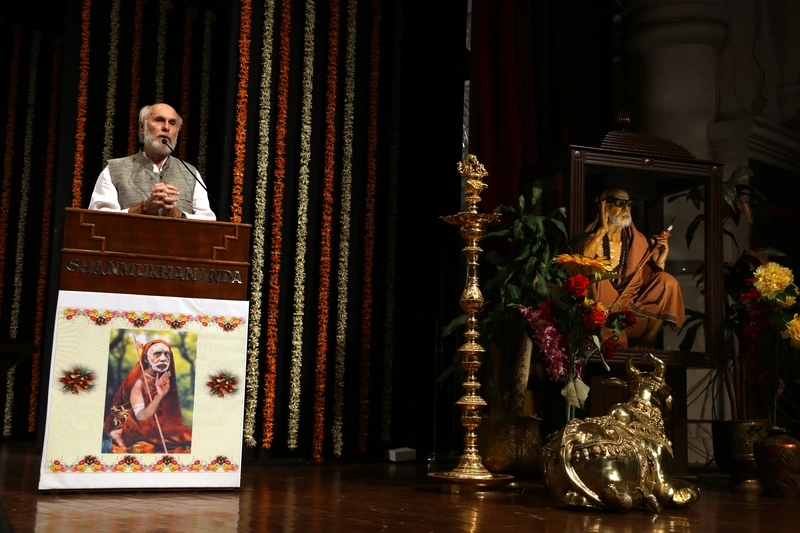
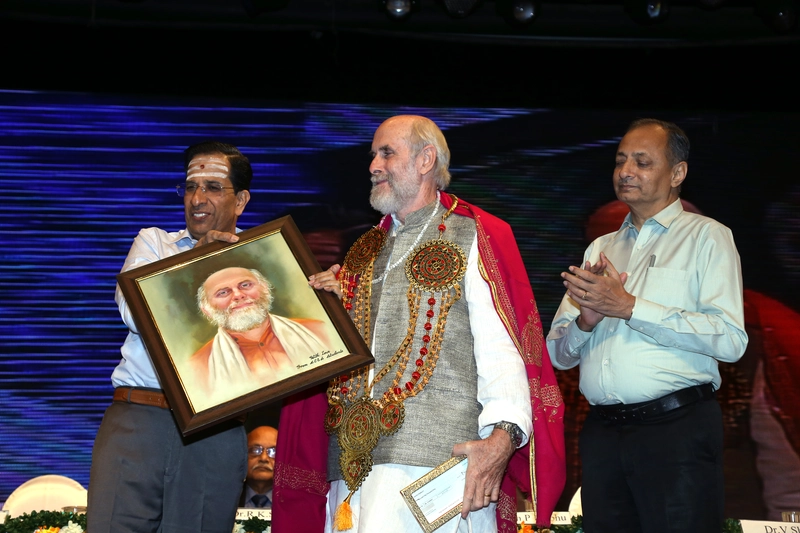
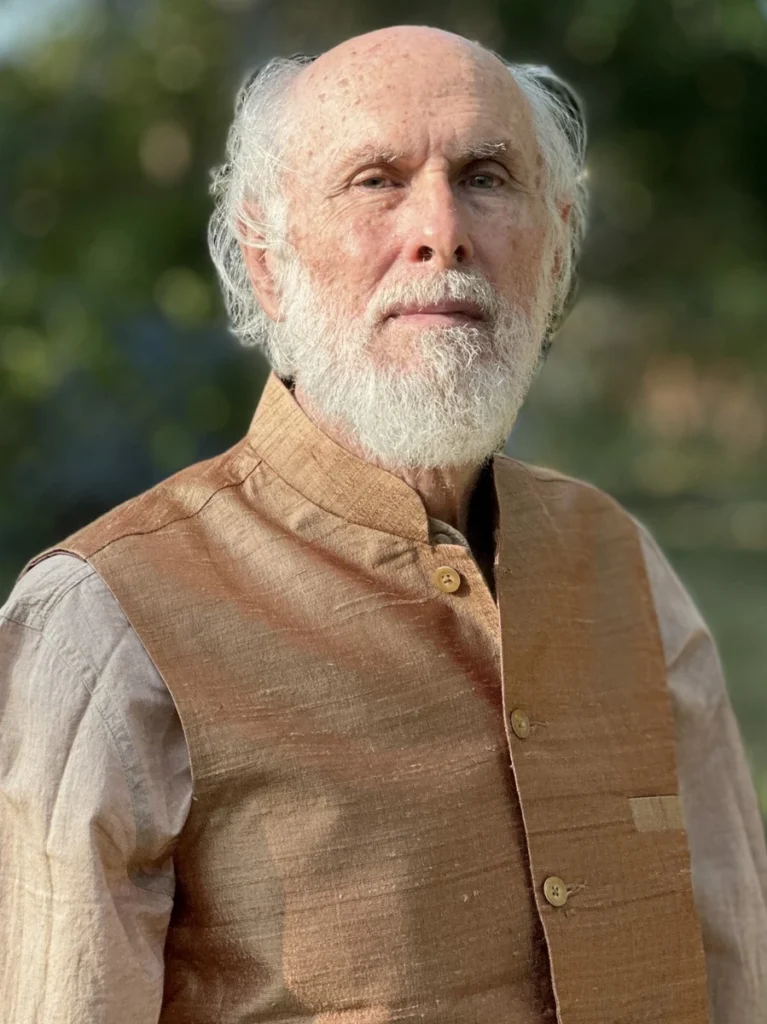
Dr. David Frawley to Receive Prestigious 2026 Bhishma Award
We are proud to share that Vedacharya Dr. David Frawley has been named the recipient of the BHISHMA

Our teachings are rooted in the great gurus we have followed, which we will share with you. We are part of important Guru-Shishya Paramparas, with several great guru lines.
Our main influence since 1970 has been the teachings of Bhagavan Ramana Maharshi and the tradition of Advaita or Non-dualist Vedanta that he was connected to going back to Adi Shankara and the Upanishads.
We visited the Ramanashram many times over decades, wrote a number of articles for their Mountain Path publication, and hav spoken before their centers in India and the West, studying and practicing Bhagavan’s teachings as the basis of our sadhana.
Most importantly we received Ramana’s presence and teaching into our lives at various visions and experiences at the ashram, the Tiruvannamalai temple, and the Arunachala mountain.
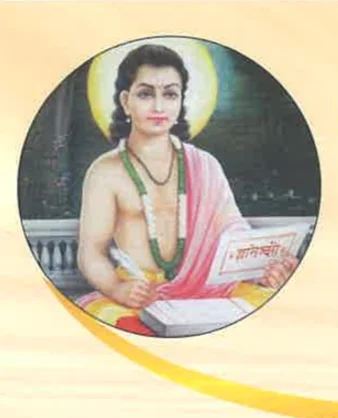
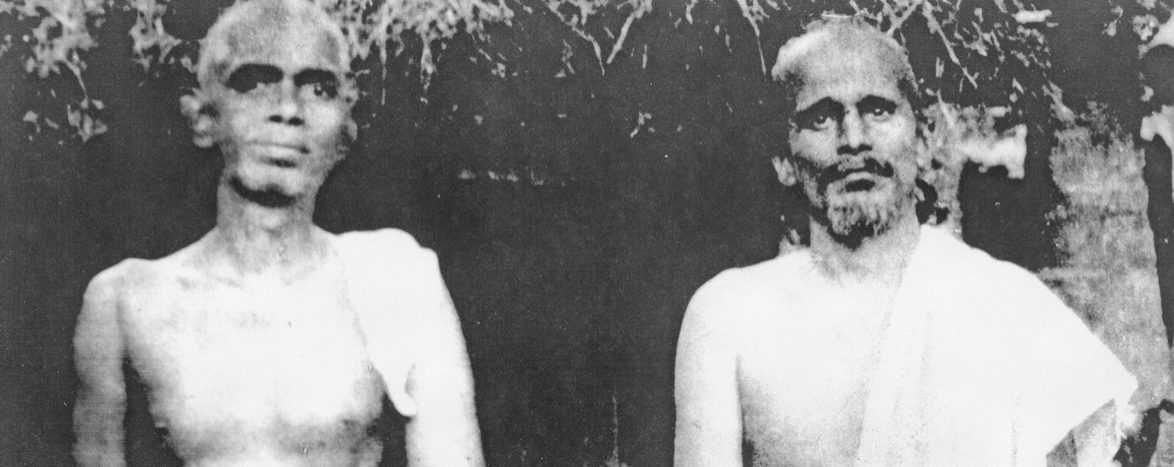
Yet our connection with Ramana developed another special dimension to it. We came into contact with the teachings of Kavyakantha Ganapati Muni (1878-1936), the chief disciple of Ramana, through K. Natesan, one of his great disciples.
Ganapati wasthe greatest Sanskrit writer of modern India and a Raja Yogi of the highest order, for whom all the secrets of Kundalini and the chakras, as well as the depths of Advaita, were on the tip of his tongue expressed through his mantric powers. His teachings have greatly influenced us.
K. Natesan (1912-2009) had been with Ramana since the age of 12 and with Ganapati since the age of 18, with regular contact with both. He received a special mission to preserve through Ramana and Ganapati to carry on Ganapati’s works, from his Sanskrit renderings of Ramana’s teachings to his vast studies that included Yoga, Vedanta, Ayurveda and Jyotish, revealing the secrets of the Vedas along with Shakti Sadhana and a new vision of India and humanity. Since first meeting him in 1991 to the time of his passing, I shared these teachings and took them up, as they resonated with my own ongoing sadhana and teachings that already included Yoga, Vedanta, Ayurveda, Jyotish and Vedas, with views similar to Ganapati.
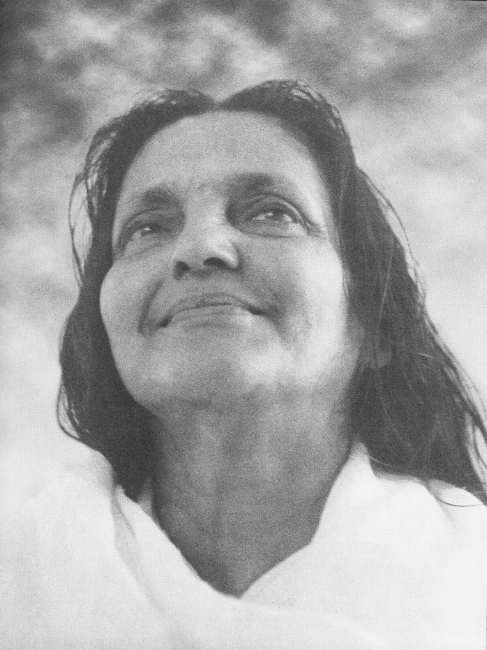
From 1976-1982 I was blessed to be in correspondence with Sri Sri Anandamayi Ma (1896-1982), the bliss-permeated Mother, perhaps modern India’s most honored woman guru, through her disciples Swamis Atmananda and Nirvananda. I also wrote for her publication Ananda Varta.
Ramana was my spiritual father and Anandamayi Ma was my mother. Ma inspired me inwardly and encouraged my Vedic research, Yoga and Vedantic contemplations. She encouraged me to have full faith in my Vedic Work and share it with all, and affirmed my connection with Ramana Maharshi.
Her continued communication aided in building my confidence in approaching such profound teachings from distant India.
She said I should never doubt my path or my work in the Vedic field and that she would always be with me, but should have full confidence in my Vedic mission, though I was only a young American in my late twenties.
I met Sadguru Sivananda Murty first in Hyderabad in 1994 and remained in close contact with him until his Mahasamadhi in 2015. Guruji was the head of the Saiva Mahapeetham, a Shaivite order from Andhra Pradesh, which we joined.
He was connected to Ramana Maharshi but also to Trailanga Swami, and many important gurus and teachings of South India of an esoteric nature.
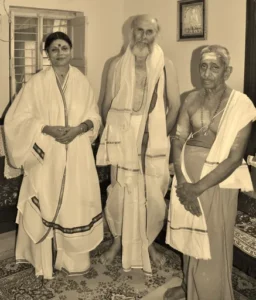
Besides Raja Yoga and Advaita Vedanta, he was adept in Jyotish, Mantra and knew the essence of Telegu culture and music, aiding in the renovation of temples. He visited the West several times and we visited him regularly at his Gurudham in Warangal and his Ashram near Vishakhapatnam. Guruji was most unassuming and accessible outwardly but held tremendous power and insight, holding many of the deeper teachings of Bharat.
Yogini Shambhavi had a special rapport with Guruji and he continues to guide her from within. He empowered her to teach others and be a guru in her own right.
The background and philosophy of the American Institute of Vedic Studies can be understood by the following presentations of Vedic Knowledge Systems, their Yogic applications, and Hindu (Sanatana) Dharma.
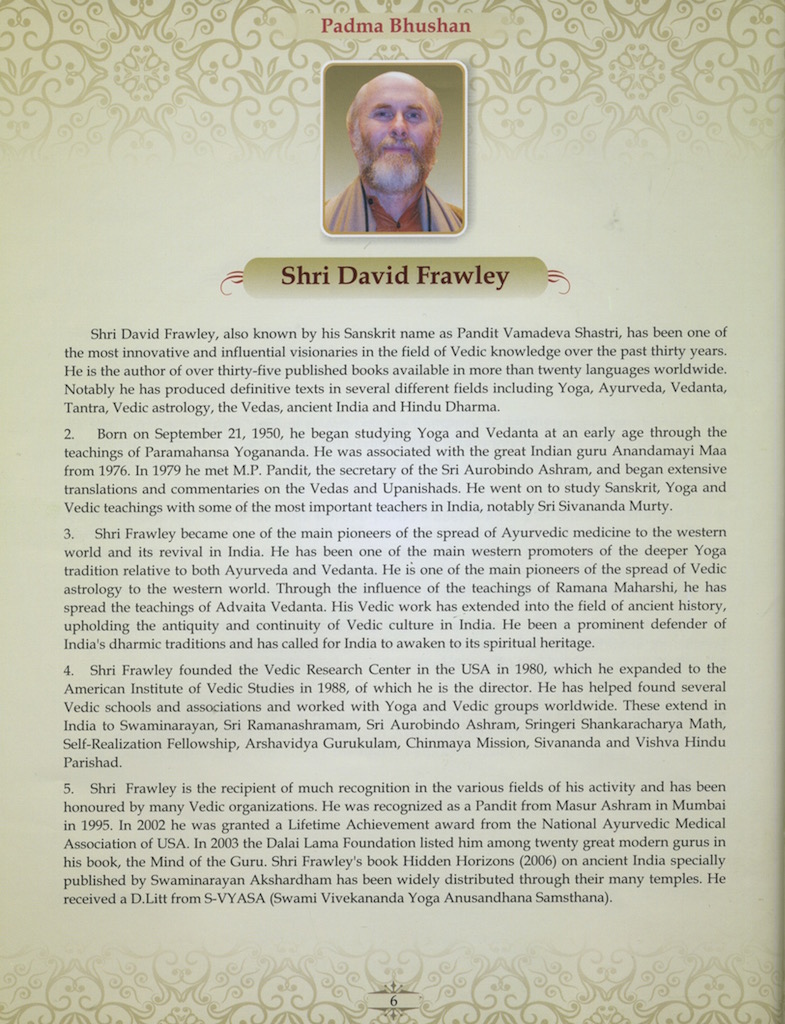
Dr. David Frawley (Pandit Vamadeva Shastri) is a recipient of the prestigious Padma Bhushan award, the third highest civilian award granted by the government of India, “for distinguished service of a higher order to the nation,” honoring his work and writings as a Vedic teacher, which he received in January 2015.,
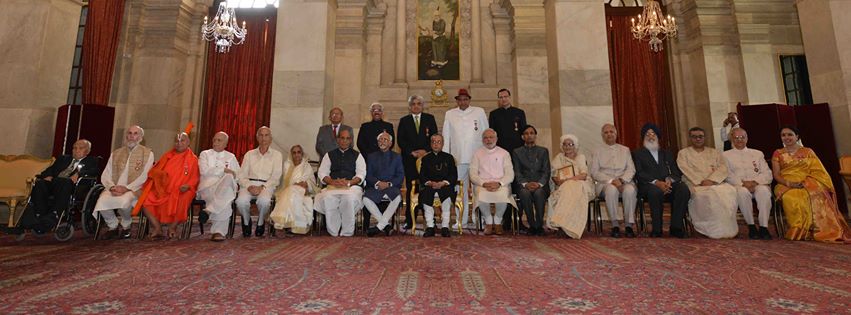
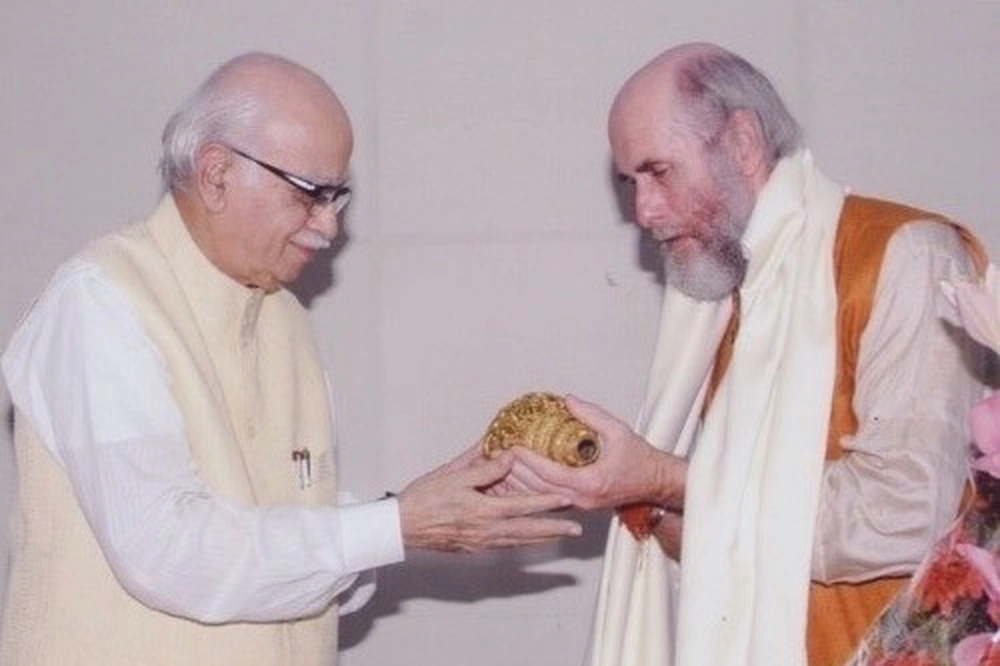
With Prime Minister Narendra Modi, President Pranab Mukherjee, Vice-President Hamad Anasari, and Home Minister of India, Rajnath Singh in the center, and second to the right of Vamadeva former Deputy Prime Minister L.K. Advani. Awards for Bharat Ratna, Padma Vibhushan and Padma Bhushan. Ceremony at Rashtrapati Bhavan on March 30, 2015.
Vamadeva second from left in official group picture for the higher Padma Awards.
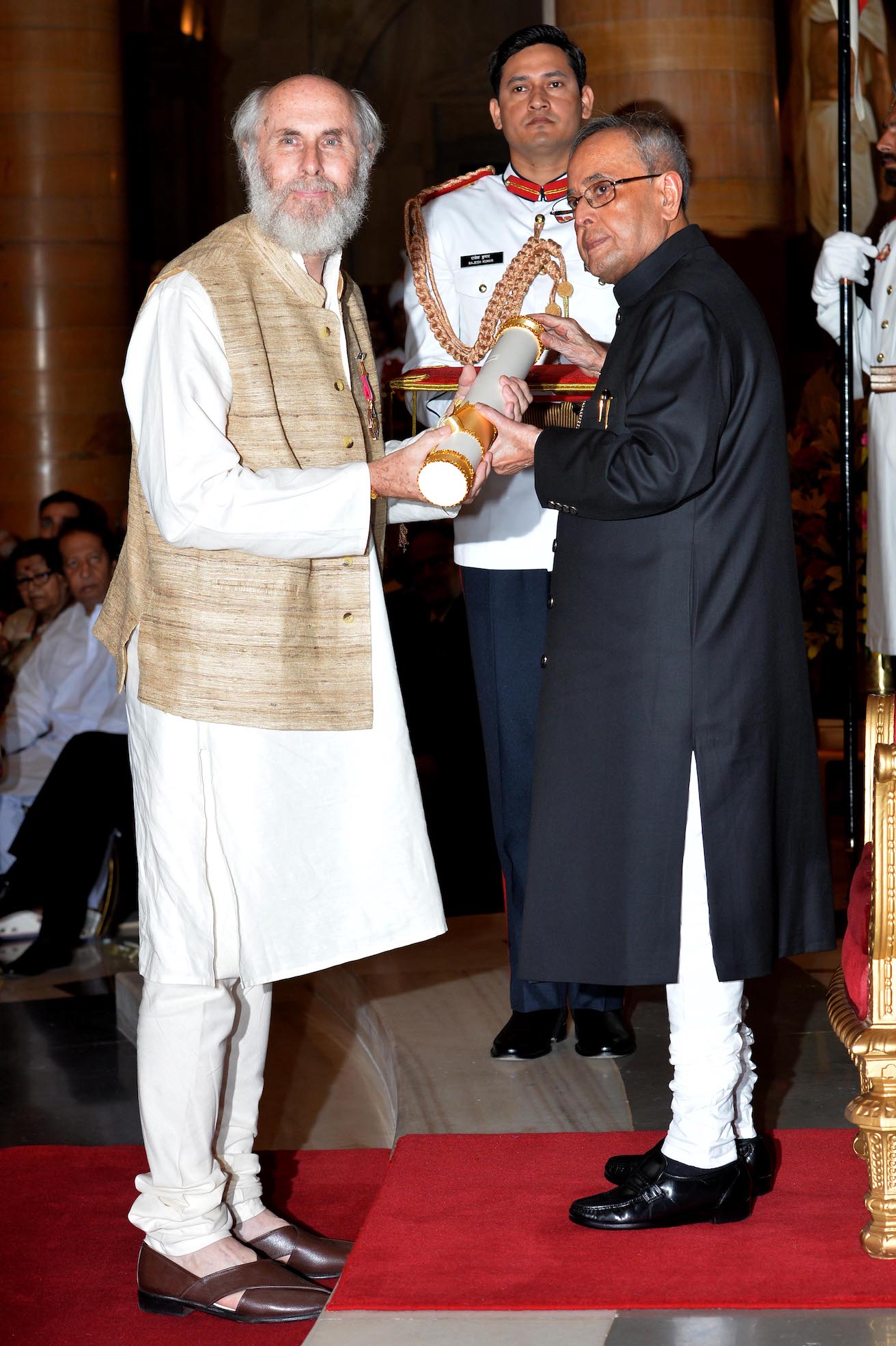
Vamadeva receiving the Padma Bhushan Award from President of India Pranab Mukherjee.
Below is the full citation for Dr. Frawley’s Padma Bhushan award from the government of India for his work in the fields of Ayurveda, Yoga, Vedanta, Vedic astrology, Vedic studies, Hindu Dharma and ancient India. The recommendation for this award came to him from the office of the Prime Minister, Sri Narendra Modi.
As our work is publication and web-based, you can easily connect with us through the internet or print media, including forty published books, three hundred articles, and four in depth on-line courses relative to Ayurvedic Healing, Ayurvedic Astrology, Yoga, Ayurveda, Mantra and Meditation and Integral Vedic Counseling. Each course consists of extensive course lessons, enhanced by illustrations, audios and videos.
Ayurveda – We teach the foundation of Ayurveda for wellness, right living, and countering common diseases and afflictions of body and mind. Our specific focus is on Ayurveda and Yoga psychology as addressing the complications of our high tech society, including the yogic aspects of Ayurveda, making Ayurveda relevant to all.
Yoga – we teach Raja Yoga, the approach of the Upanishads, Bhagavad Gita and Yoga Sutras, with reference to Vedanta or the Yoga of knowledge (Jnana Yoga), and an emphasis on Yoga psychology and the science of consciousness. In addition we teach the spiritual Tantric Yoga of mantras, deities, working with the subtle body, chakras, Kundalini and Shiva/Shakti energies. In this regard we integrate Yoga and Ayurveda.
Vedic astrology, Jyotish – we emphasize the astrology of healing, Vedic medical or Ayurvedic astrology, yogic astrology, mantras and deities relative to astrological remedial measures. We offer astrological consultations and teachings. We have a special knowledge of Vedic Astrology in the Rigveda, along with Secrets of the Nakshatras and the Vedic Deities.
Vedic counseling – we emphasize an integral approach combining Vedic knowledge systems of Ayurveda, Yoga, Vedanta and Vedic astrology, along with teaching the foundation of Vedic dharmic living and karmic life-management. We have been developing this new field in recent years to bring together the different aspects of our course including aspects of Vastu Shastra.
Vedic studies, ancient India and ancient history – We look back to ancient Vedic Rishi traditions going back to the dawn of history, as in the Vedic view we are but the seventh of fourteen humanities, not the first, the highest or the last. Dr. Frawley has written numerous books and articles on ancient India and the ancient world, including Yogananda’s Yuga System and the work of Graham Hancock, which we have been associated with. We research ancient traditions worldwide and connected to lokas or realms beyond the physical. In this regard, we honor all ancient, mystic, indigenous an native traditions, having studied Buddhist, Taoist and Egyptian traditions, but see the Vedas as the prime teaching for all humanity, the Eternal Sanatana Dharma. Dr. Frawley has written many books and articles on Hinduism and Sanatana Dharma, its prime teachings and resurgence today.
Vamadeva is a senior teacher of “traditional Ayurveda,” the older Vedic or Vaidya approach which incorporates Yoga, Vedic astrology, and Vedanta into its teachings.
He is working to revive traditional Ayurveda and all its Vedic and Yogic connections.
He is a “master educator in the field of Ayurveda, Yoga and Vedic studies.”
Vamadeva has helped start a number of Ayurvedic schools and organizations, and his innovative teachings on Ayurveda have been used extensively by Ayurvedic groups throughout the world, including Ayurvedic schools in India. He is recognized as one of the most important Ayurvedic teachers and acharyas today.
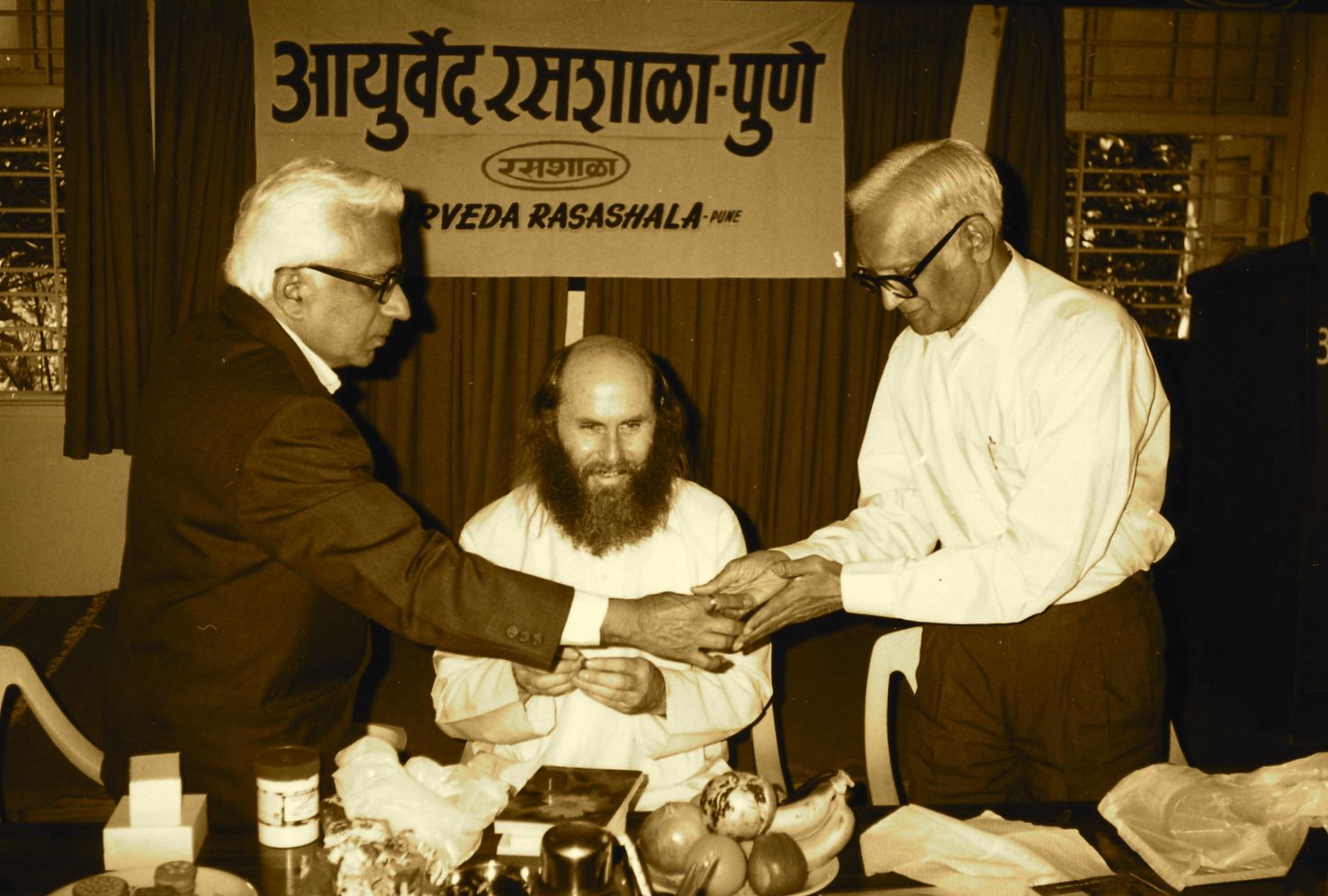
Vamadeva’s main teacher of Ayurveda was Dr. B. L. Vashta of Bombay and Pune (1919-1997), note photo with Vashta on the right and P.H. Kulkarni on the left. For ten years he remained under the guidance of Dr. Vashta, visiting him regularly in India.
Dr. Vashta, a graduate of one of the first Ayurveda programs in India in 1941, wrote many books on Ayurveda and helped formulate Ayurvedic products for Ayurvedic companies. Vashta was also a leading journalist in the state of Maharashtra and became an important guide for Vamadeva. Vashta taught him the value of traditional Ayurveda.
Over the years, he has done many programs with the Ministry of AYUSH in India, and with S-VYASA university, as well doing programs with Indian embassies throughout the world on Yoga and Ayurveda. He was a major figure in the first Yoga Day celebrations in Delhi in 2015.
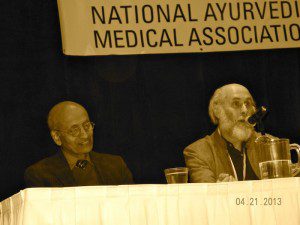
In America, Vamadeva has worked with Dr. Vasant Lad, noted Ayurvedic teacher and author. Vamadeva taught with Dr. Lad at the Ayurvedic Institute in 1983-1986. Along with Dr. Lad, he wrote the Yoga of Herbs (1986), which was the first book published integrating western herbs into Ayurveda.
Vamadeva’s main areas of specialization in Ayurveda are herbal medicine, Ayurveda and the mind, and Ayurveda and Yoga, which are only a few of his over ten books on Ayurveda..
His many books on Ayurveda including the Yoga of Herbs, Ayurvedic Healing (foreword by B. L. Vashta, 1989), Ayurveda and the Mind (1996), Yoga and Ayurveda (1999), Ayurveda, Nature’s Medicine (with Subhash Ranade, 2001), and Ayurveda and Marma Therapy (with Ranade and Lele, 2003) and Soma in Yoga and Ayurveda.
Vamadeva’s Soma in Yoga and Ayurveda (2012) is his longest and most detailed book on Ayurveda, and addresses deeper Yoga practices, including secrets of Ayurvedic herbs. His Ayurvedic Astrology integrates Ayurveda and Vedic Astrology.
His book the Art and Science of Vedic Counseling shares an integral view of Vedic knowledge synthesizing Yoga, Vedanta, Ayurveda and Vedic astrology with the background Vedic Knowledge.
Vamadeva began studying Vedic astrology (Jyotish) as part of his Vedic research in the early seventies and brought out a course in the subject in 1985.
He continues to use Vedic astrology, particularly in the context of Yoga and Ayurveda, for a deeper understanding of Vedic wisdom. Vamadeva wrote Astrology of the Seers (1990), one of the first books on Vedic astrology published in the West. This was followed by Ayurvedic Astrology (2005), which pioneers the field of ‘Ayurvedic Astrology’.
In 1992 Vamadeva helped convene the first major American Conference on Vedic Astrology, which led to the founding of the American Council of Vedic Astrology (ACVA) the following year 1993. He became the first president of the organization for ten years (1993-2003).
Yogini Shambhavi joined his work on Jyotish in 2000, providing additional teachings and consultations on this Vedic science of light, reflecting her connection with the Yoga Shakti. She now handles the Jyotish work at the Institute.
We are proud to share that Vedacharya Dr. David Frawley has been named the recipient of the BHISHMA
Yoga Nidra is a popular topic today but seldom taken to the depth that it
The Mantra to the Supreme Light, Param Jyoti Mantra, is a famous and powerful Vedic,